Presented as part of an Art History Department Graduate Student Colloquium
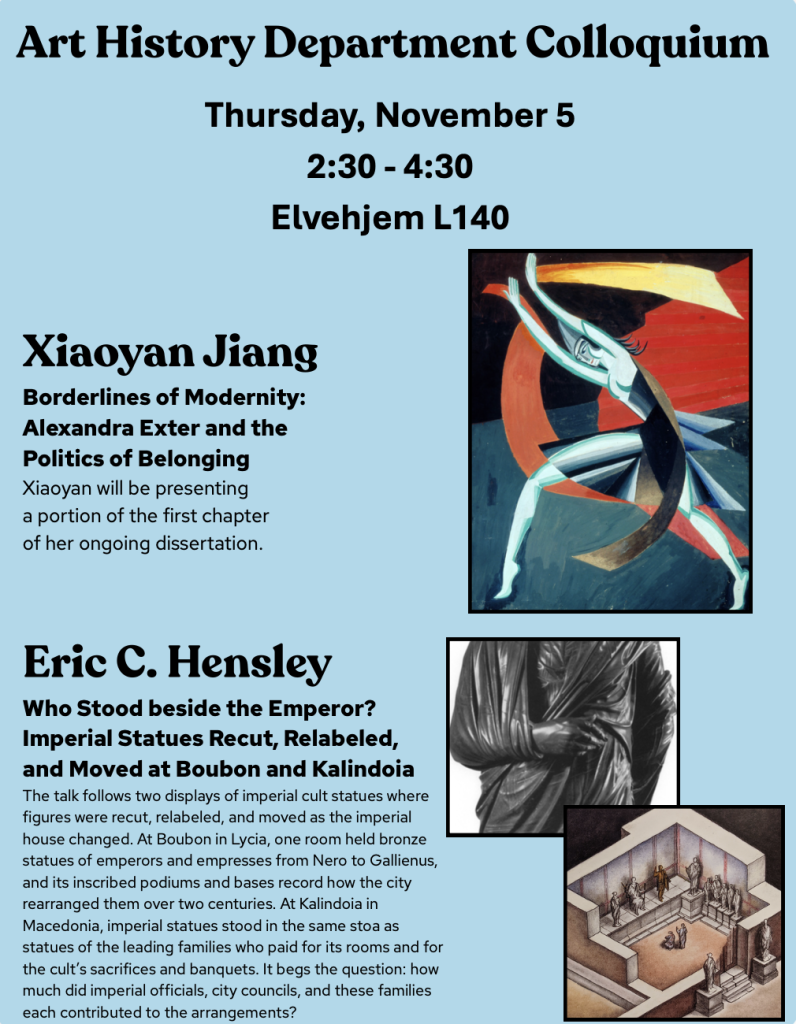
The talk follows two displays of imperial cult statues where figures were recut, relabeled, and moved as the imperial house changed. At Boubon in Lycia, one room held bronze statues of emperors and empresses from Nero to Gallienus, and its inscribed podiums and bases record how the city rearranged them over two centuries. At Kalindoia in Macedonia, imperial statues stood in the same stoa as statues of the leading families who paid for its rooms and for the cult’s sacrifices and banquets. It begs the question: how much did imperial officials, city councils, and these families each contributed to the arrangements?